A 3-month experiment waking up at 04:30h to study before morning shifts in the OR
Self-directed learning requires a good dose of motivation to begin with.
But motivation alone won’t keep you there, because there are always other interesting things to do, many distractions to avoid, and less favorable circumstances to overcome.
I’ve found a few strategies to remain focused in my independent studies that I’ve been using for the past few months: scheduling and tracking learning time. In this article, I’ll be sharing the implementation, despite having a rotating shift work schedule.
The Purpose
At first sight, the sheer amount of knowledge that’s required to shift from a non-technical background into a technical role in the technology field can seem nearly impossible to achieve.
Even more so when working daily in an Operating Room (OR), where you need to remain fully focused for long periods of time, and there’s a high amount of context switching (shifting attention between different tasks), to then get back to focus.
These long periods of intense focus, plus dealing with the “noise” generated by everyone’s activity, hinder your ability for intense focus after a workday.
Instead of focusing solely on the finish line, I decided to treat this learning journey as an iterative project, setting milestones and gathering feedback along the way. This seemed a good approach to deal with the challenges that I’d face during this period.
Given these constraints, I decided to run an experiment and reverse the time-schedule of the intense focused periods during my day. Literally.
Running An Experiment
Instead of starting my study sessions at 17:00h after a workday, in early January I decided to start the following experiment:
- Get up early to study before my morning shifts (that start at 08:00h)
- Schedule and track my study time closely
I started gradually waking up earlier, going from 06:30h, until I ended up at 04:30h. This way I can study for 2 hours before leaving for work.
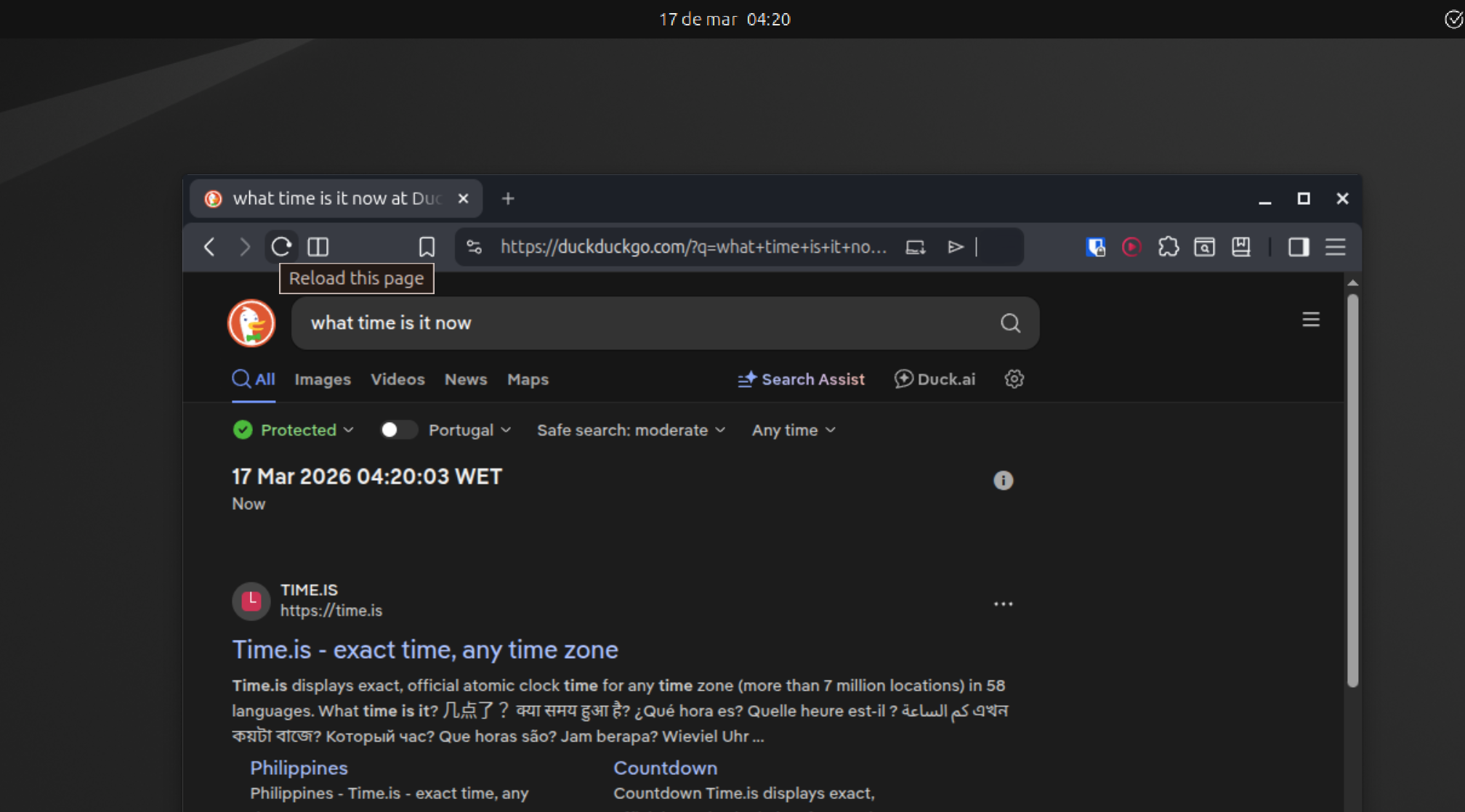
Even though I’m an “early bird”, in the beginning it wasn’t all that pleasant.
But as I started tracking time and seeing the results, it became a challenge to improve on the previous day’s result. I was, essentially, gamifying this endeavor. Plus, the body starts to naturally adapt to this new rhythm.
Now, here’s the twist: I currently work on a rotating shift schedule. Meaning, I work morning, evening, and night 8-hour long shifts, sequentially.
This isn’t conducive to overall sleep quality. And you need good quality sleep to properly rest and enhance your learning efforts.
Eventually, I came up with a few strategies and a study timetable that serve the variable nature of my current work schedule. Adaptation is key, especially when circumstances aren’t the most favorable.
The Tools
I searched for a task manager and time-tracking tool to aid in this experiment, and I ended up selecting Super Productivity, for the task scheduler and time tracker with Pomodoro timer features.
I’ve been using Obsidian as my note taking system for 6 months now to build my Personal Knowledge Base, following the Zettelkasten method 1.
The Results
Every week, I reassess the overall experiment and its parameters, using my weekly review (preferably on Sunday, but variable due to the work schedule) as the moment to register and evaluate the results.
I use the following table in my daily and weekly notes in Obsidian, to register:
- The estimated study time
- The daily time I invested
- My work schedule
- Any observations I deem important to note
| Mon | Tue | Wed | Thu | Fri | Sat | Sun | Total | |
|---|---|---|---|---|---|---|---|---|
| Estimated Time | 4 | 4 | 4 | 2 | 2 | 3 | 1 | 20h |
| Invested Time | 5h45 | 1h45 | 4h25 | 0h40 | 3h55 | 4h20 | 1h00 | 21h |
| Schedule | RD | EDO | DO | MS | ES | RD | NS | - |
| Obs. | Q&A | EFC | - | - | - | - | - | - |
Schedule legend:
- MS - Morning shift
- ES - Evening shift
- RD - Rest day (before night shift)
- NS - Night shift
- DO - Day off
- EDO - Extra day off
The Numbers
The following table contains the summary of estimated and invested hours of study during the 3 months of this experiment:
| January | February | March | |
|---|---|---|---|
| Estimated Time (hours) | 58 | 75 | 84 |
| Invested Time (hours) | 77,5 | 101 | 103 |
January was the month to build the habit. I went from no time-tracking or scheduling, to investing 77,5 hours of study time.
Since I was pleased with this result, I decided to step it up in February.
I then increased the estimated time to 75 hours in February, and managed to complete 101 hours of study. I pushed it, to test the method and my limits.
It generated good data for the experiment.
In March, I set the time estimate to 84 hours, to find the right balance for the present moment. I ended up completing 103 hours of study time.
As shown in the first table, I adapt the amount of daily study hours to my work schedule, as well as to other personal commitments:
- Evening shift (ES)
- I tend to schedule 3 hours before going to work at 15:00h
- Rest day (RD)
- I tend to wake up naturally in the morning, since I get home from work around 00:40h
- I then study a minimum of 3 hours
- Night shift (NS)
- I only schedule one hour, later in the afternoon
Updated August 2026: Added the final two weeks of experiment data
The Crux Of The Problem
The night shift poses the most difficult challenge in this study routine, and overall life.
In my own experience, it deregulates many natural processes and abilities during that day (which permeates to the following days as well), especially:
- The natural sleep cycle
- The ability to focus
- Performing apparently simple tasks
- Making important decisions
- And even body temperature regulation
As I usually work a night shift every 5 days, it constitutes the hardest hurdle to overcome. I can only schedule one hour to study, after I’ve slept during the morning, until 14:30h.
Sometimes, I can’t even accomplish that. For now, I’ll have to deal with what I have, in the best way that I can.
Conclusion
From October to December of 2025, I spent some time exploring in-person events related to technology, and committed a portion of my time to other unrelated activities. I became distracted from my main learning goals.
Feeling that drift, in early January I decided to evaluate my trajectory until that point. I reached the conclusion that I needed to refocus on my own learning and skill building first. These are the most consequential activities to move the needle in the right direction.
Running an experiment to schedule and track my study time was the solution I found to recenter my attention.
I’m very pleased with the results of this experience. It’s allowed me to learn about myself, to test my limits, and challenge my way of doing things.
I’ve experienced the importance of scheduling and tracking the time I dedicate to learning. I’d read about it a long time ago, but now I really know that it is an essential tool to aid in achieving my goals.
It has also changed my perspective about independent learning, regarding the volume of knowledge and skills required to pivot into the technology field. I also found that having a fixed and predictable study schedule could substantially accelerate this endeavor.
You can make it work by adapting the learning process to your circumstances.
But you might also realize that you need to change your circumstances to increase your chances of a better overall outcome.
For your learning and your life.
The Zettelkasten method is a knowledge organization and note taking system. The user creates notes that contain only one idea, written in a polished way (as if ready for publishing), and each note has further notes linked to it. ↩︎