The first time I was told I should use Linux, I didn’t know what it was, really. “Another operating system? OK, but why should I switch now?”
My impression was that Linux was a single operating system (OS), as any other mainstream OS, and that everyone’d be using the same version.
I didn’t see a good reason to change from what I was using, my routines, and habits.
Now that I look back, I think I feared having to learn something new from scratch. And also, of becoming different, by switching into something the majority of people I knew had never heard about.
So, how does an OR Nurse start using Ubuntu?
The Resistance
Later on, I was gently persuaded by a close family member to try Ubuntu¹, a beginner-friendly Linux distribution. I resisted for several months, insisting that I didn’t need to change, as I managed to do everything I needed on Windows.
But I began researching Linux. After learning about open-source, privacy, software freedom, I became very curious about these subjects.
Fortunately, my first mentor proposed a challenge: He would install Ubuntu on my laptop, in dual-boot with Windows, as an experiment. I could choose which OS to use at startup, and he would teach me how to update software from the command line. That was the winning argument.
This allowed me to experiment with it when I wanted, while remaining in control of the situation. Otherwise, I wouldn’t have agreed to switch immediately.
Little did I know that this moment would become an inflection point in my life.
The Full Adoption
That experiment in early 2021 went well, as I progressively used Ubuntu for my daily tasks, and began exploring the OS and installing software by myself.
When an update on the other OS erased GRUB2² and I couldn’t boot Ubuntu, my mentor prompted me to try and solve the problem myself, offering to help if I wasn’t able to do it.
This was my first real troubleshooting session on a Linux system, and I was very pleased to have solved the issue independently. This also made me realize that using both OSs wasn’t sustainable.
The moment I started using LibreOffice as my go-to office app, I finally adopted Ubuntu exclusively.
Conclusion
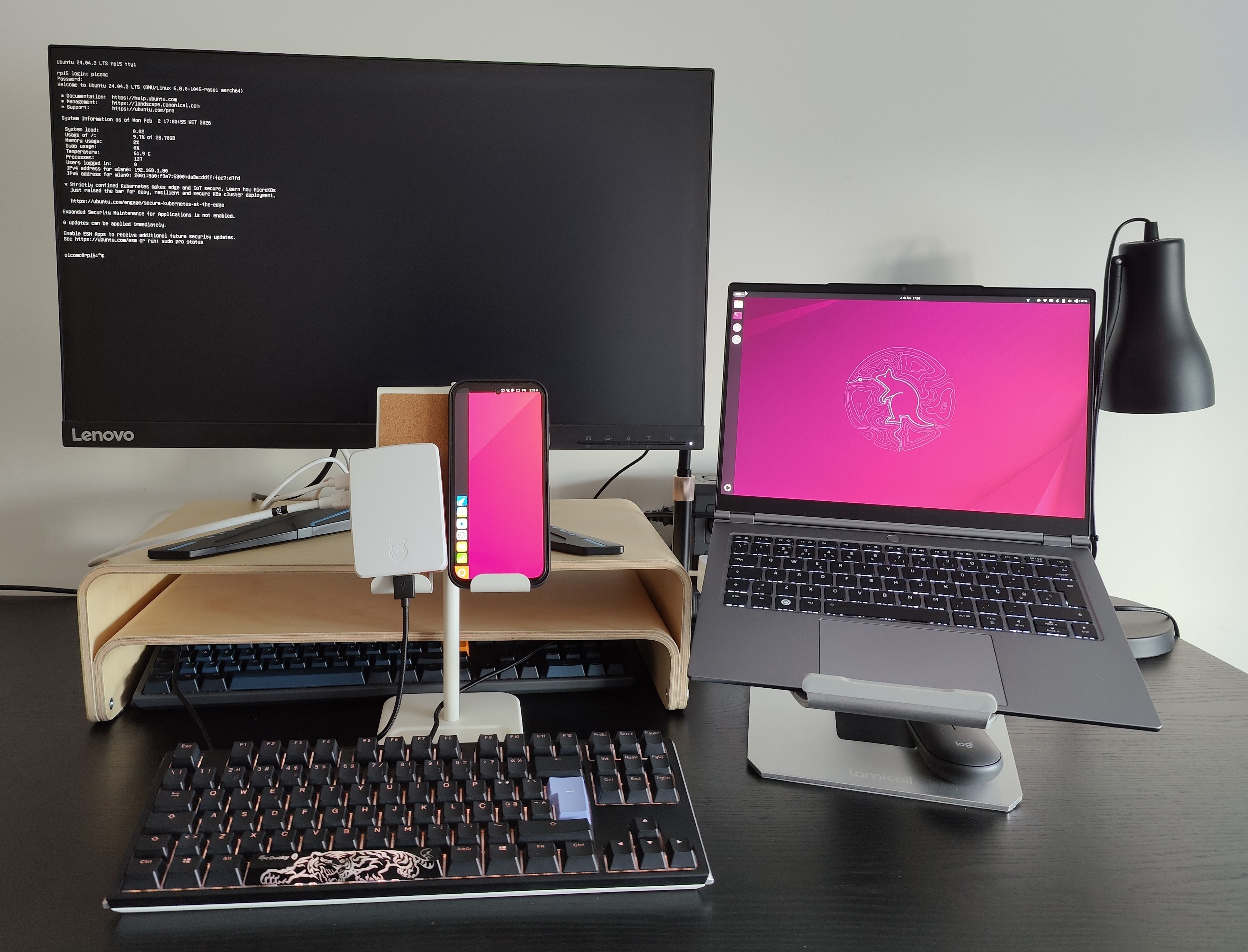
I’ve been daily driving Ubuntu for 2 years, first with a dual-boot system alongside Windows, and since January 2026, on a Linux-exclusive laptop.
Over the years, this experience prompted me to research Linux, open-source software, and other related subjects.
That led me to learn about hardware, because I wanted to know how computers are built. I’ve run a few experiments on this, including repairing the very laptop where I first used a Linux-based OS.
And then came software. The curiosity that was sparked from that first troubleshooting session led me to continue exploring the system, as well as pursuing alternative sources of education on the subject of the software life cycle.
Accepting the challenge to use Ubuntu, and updating software from the command line as a regular, not technical, user allowed me to embark on a learning journey that I wouldn’t have thought possible.
If you want to convince someone to use Linux, try to frame it as a temporary experiment, and offer to troubleshoot when they need help. They will feel in control of the situation, and might be curious enough to adopt it. That sure worked for me.
My journey continues as I dive deep into Linux and command line fundamentals, building a solid foundation for the technical subjects ahead.
¹ Ubuntu is a free and open-source Linux distribution developed by Canonical and a community of maintainers.
² GRUB2 (GNU GRand Unified Bootloader version 2) is a boot loader package used in many Linux distributions that allows users to select one of several operating systems installed on a computer.